The Importance of Physical Games in Student Development
The Importance of Physical Games in Student Development
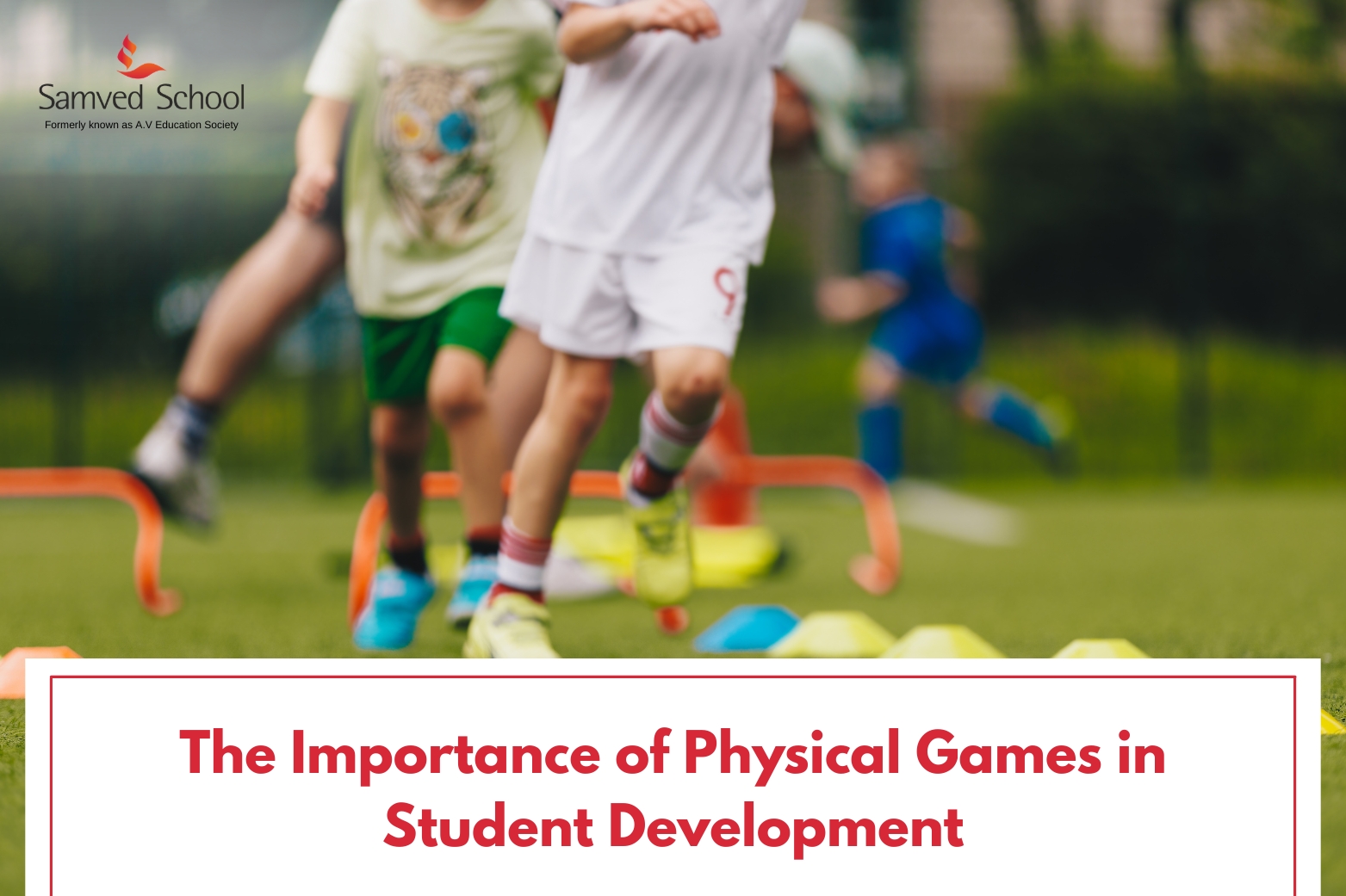
In today’s technology-driven world, children spend more time indoors than ever before. While digital learning has many advantages, physical activity remains essential for healthy growth and development. Schools play a vital role in ensuring that students participate in sports and outdoor games that build physical strength, emotional resilience, and social skills. At Samved School, Bangalore, we believe that physical education is not separate from academics; it is an integral part of holistic education.
One sport that beautifully combines fitness, teamwork, and discipline is Volleyball. Through regular practice and inter-school participation, students learn valuable life lessons that extend far beyond the playground.
Why Physical Games Are Important for Students?
Physical games contribute to the overall development of children in multiple ways. Regular participation in sports improves cardiovascular health, muscle strength, flexibility, coordination, and stamina. Active children are also more likely to develop healthy habits that continue into adulthood.
Beyond physical fitness, games improve concentration and mental alertness. Research consistently shows that students who participate in sports often demonstrate better focus, classroom engagement, and academic performance. Physical activity reduces stress, improves mood, and helps children manage emotions more effectively.
Understanding Volleyball
Volleyball is a fast-paced team sport played between two teams separated by a net. Players throw the ball over the net, and the opposing team must catch and return it within a limited time. The game demands quick reflexes, accurate throwing, strategic positioning, and strong communication.
Because the ball is caught and thrown rather than continuously hit, Volleyball is accessible to many students and is particularly effective in developing coordination and teamwork. It is widely played in schools across India and is an excellent sport for encouraging participation among young learners.
Skills Students Develop Through Volleyball
Teamwork
Volleyball teaches students to work together toward a common goal. Success depends on cooperation, communication, and mutual support. Students learn to trust their teammates and understand the importance of collective effort.
Physical Fitness
The game involves running, jumping, stretching, and rapid movement across the court. These actions improve endurance, agility, balance, and overall fitness.
Discipline and Responsibility
Regular practice sessions teach punctuality, commitment, and self-discipline. Students learn that consistent effort leads to improvement.
Sportsmanship
Players learn to respect opponents, officials, coaches, and teammates. Winning with humility and accepting defeat gracefully are valuable character-building experiences.
Leadership and Confidence
Team sports provide opportunities for students to take initiative, make decisions under pressure, and develop self-confidence.
The Role of School Sports in Holistic Education
At Samved School, sports are viewed as a powerful educational tool. Our physical education program encourages students to participate actively in games and athletics from an early age. Through structured training, tournaments, and recreational activities, students develop confidence, resilience, and a positive attitude toward healthy competition.
Participation in sports also strengthens friendships and creates a sense of belonging within the school community. Children learn empathy, cooperation, and emotional intelligence while interacting with peers in a team environment.
Celebrating Student Achievement
We are proud to celebrate the excellent performance of our U-14 Volleyball Team in a recent Inter-School Tournament. The team displayed exceptional teamwork, determination, and sportsmanship throughout the competition and secured 4th Place after achieving four consecutive victories before a hard-fought finish.
Every match reflected the dedication, discipline, and fighting spirit of our young athletes. Their achievement is a wonderful example of how physical games help students grow stronger, more confident, and more resilient.
Congratulations to all the players and coaches on this commendable accomplishment. Your hard work has made the entire Samved School community proud.
📸 View highlights from the event on Instagram: https://www.instagram.com/p/DbIeWPGnz_p/?hl=en&img_index=1
Conclusion
Physical games are essential for nurturing healthy, confident, and capable young individuals. Sports such as Volleyball help students develop fitness, teamwork, discipline, leadership, and sportsmanship-qualities that remain valuable throughout life. At Samved School, Bangalore, we remain committed to providing meaningful sporting opportunities that support our vision of holistic education. By encouraging active participation in physical activities, we aim to develop students who are academically strong, physically fit, emotionally balanced, and prepared to face future challenges with confidence and integrity.
Frequently Asked Questions (FAQs)
- Why are physical games important for students?
- What is Volleyball?
- How does Volleyball improve teamwork?
- Is Volleyball good for physical fitness?
- What life skills do students learn from Volleyball?
- Can sports help improve academic performance?
- Why should schools encourage sports participation?
- At what age can children start playing Volleyball?
- What makes Volleyball suitable for school students?
- How does Samved School support sports education?
Physical games improve fitness, concentration, emotional well-being, teamwork, discipline, and overall personality development.
Volleyball is a team sport in which players throw and catch the ball across a net while trying to score points against the opposing team.
Players must communicate, coordinate movements, and support each other during the game, which strengthens teamwork skills.
Yes. Volleyball improves stamina, agility, balance, coordination, and muscle strength through continuous movement.
Students learn leadership, discipline, decision-making, confidence, resilience, and sportsmanship
Regular physical activity can improve concentration, memory, classroom engagement, and stress management, which may support academic performance.
Sports help develop healthy habits, social skills, emotional intelligence, and a balanced lifestyle alongside academics.
Children can begin learning basic Volleyball skills during their primary school years under proper guidance and supervision.
The game is easy to learn, encourages active participation, and develops both physical and social skills.
Samved School provides structured physical education, sports training, inter-school tournament opportunities, and a learning environment that promotes holistic development.
Contact Details
Address:
https://share.google/tPyRaUyQm9soRzEtXNo.13, 17th Cross,
20th Main, J.P. Nagar 5th Phase
Bangalore, Karnataka – 560078
India
Contact Information
Email:
office@samvedschool.in
Phone:
+91 80 2659 0952 / +91 80 2659 0017 / +91 80 2649 1248