How a Child-Centred School Environment Helps Students Learn, Grow and Thrive
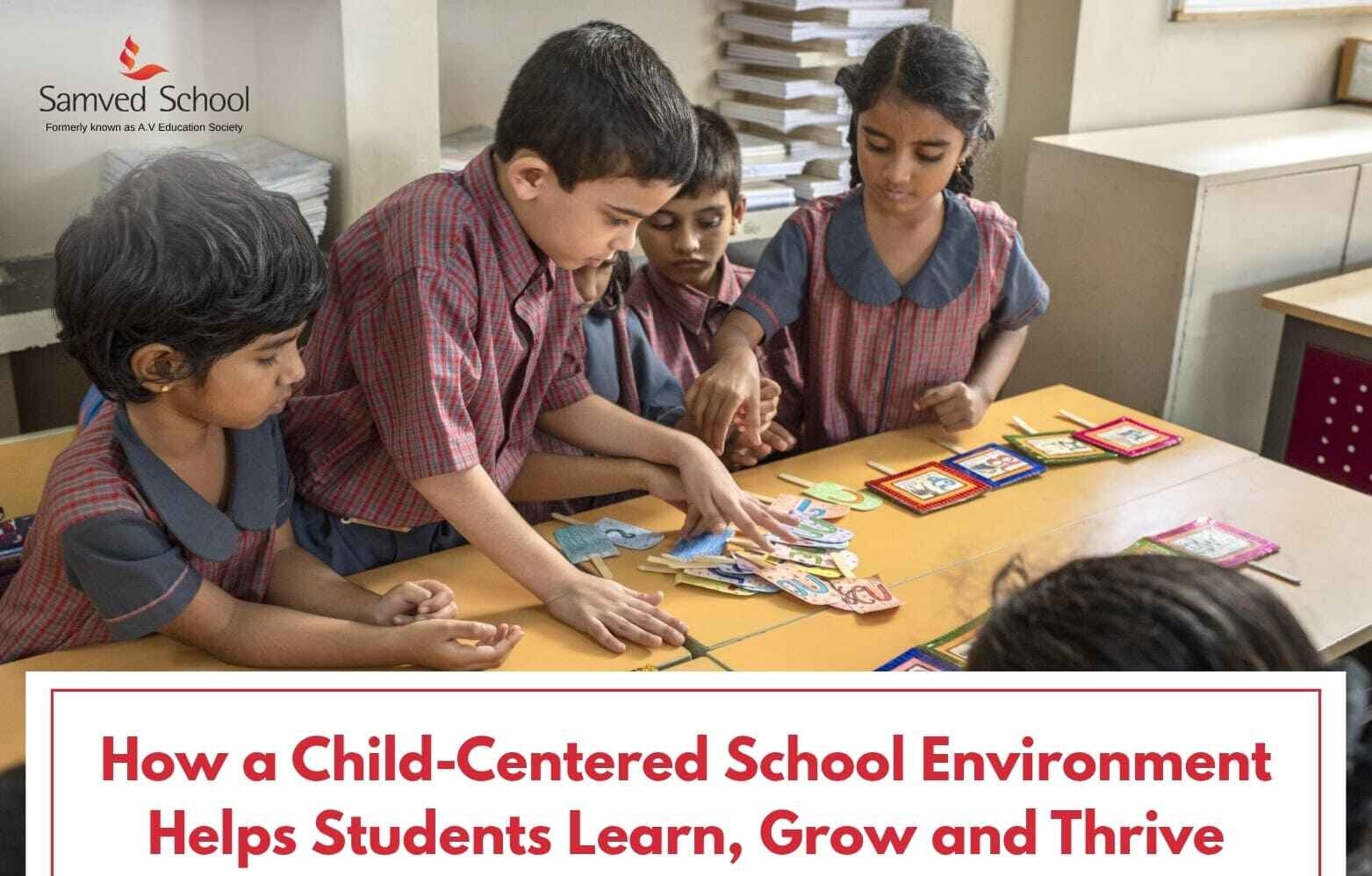
How a Child-Centred School Environment Helps Students Learn, Grow and Thrive
Choosing the right school is about much more than academic results. Parents today want a learning environment where children can develop confidence, curiosity, creativity and essential life skills alongside strong academic foundations.
A child-centred school environment recognises that every student learns differently. It encourages children to participate, ask questions, explore ideas and connect classroom learning with real-life experiences.
At Samved School in JP Nagar, Bangalore, the focus is on holistic development through active, collaborative and experiential learning. By creating opportunities for students to participate in their own learning journey, the school aims to help children become confident, curious and responsible individuals.
Why Is a Child-Centred Learning Environment Important?
Children are naturally curious. They learn by observing, questioning, experimenting and interacting with the world around them. A supportive school environment can help channel this curiosity into meaningful learning.
Instead of relying only on memorisation, child-centred education encourages students to understand concepts and apply them in practical situations.
A child-centred approach can help students:
- Develop curiosity and independent thinking
- Express their ideas with confidence
- Participate actively in classroom activities
- Build communication and collaboration skills
- Develop problem-solving abilities
- Learn from mistakes
- Become more responsible for their learning
This approach is closely connected with modern educational ideas that place the learner at the heart of the learning process. Parents interested in understanding the broader concept can also explore child-centred education and its role in modern schooling.
How Active Learning Makes Classrooms More Engaging
Learning becomes more meaningful when students are encouraged to participate actively.
Active learning gives children opportunities to ask questions, discuss ideas, solve problems and apply concepts in practical situations.
At Samved School, active and collaborative learning forms an important part of the educational experience.
Read more about active learning and how it can support student success.
Through activities, discussions, projects and practical experiences, students can move from simply receiving information to actively engaging with what they are learning.
This can encourage:
- Better understanding of concepts
- Critical thinking
- Confidence
- Communication
- Collaboration
- Problem-solving
- Greater classroom engagement
Connecting Classroom Learning with Real Life
The game involves running, jumping, stretching, and rapid movement across the court. These actions improve endurance, agility, balance, and overall fitness.
Discipline and Responsibility
Children often understand a concept better when they can see how it applies to their everyday lives.
For example, mathematics can be connected to shopping, measurement or budgeting. Science can be explored through observations and experiments. Language skills can develop through conversations, reading and creative activities.
Samved School’s academic approach emphasises real-life learning and encourages students to understand and apply concepts rather than simply memorising information.
Holistic Development Goes Beyond Academics
Players learn to respect opponents, officials, coaches, and teammates. Winning with humility and accepting defeat gracefully are valuable character-building experiences.
Leadership and Confidence
Academic achievement is important, but children’s development involves much more than examination scores.
Holistic education supports different areas of a child’s growth, including:
Academic development: Building knowledge and subject understanding.
Social development: Learning to communicate, cooperate and respect different perspectives.
Emotional development: Developing confidence, resilience and self-awareness.
Physical development: Participating in sports, games and outdoor activities.
Creative development: Exploring imagination, art and different forms of expression.
A balanced school experience gives children opportunities to discover their strengths while developing skills that can support them throughout life.
The Importance of Play and Outdoor Activities
Children need opportunities to learn through movement, exploration and play.
Outdoor activities can encourage teamwork, creativity, independence and physical development. They also provide a healthy balance to structured classroom learning.
At Samved School, students have opportunities for indoor activities, games, art and outdoor play as part of their broader educational experience.
Creating a Safe and Supportive Learning Environment
Children are more likely to ask questions, participate and try new things when they feel safe and supported.
A positive school environment helps students understand that mistakes are a natural part of learning. Instead of being afraid of getting an answer wrong, children can learn to reflect, try again and improve.
Teachers play a key role by:
- Encouraging questions
- Listening to students
- Recognising individual learning needs
- Providing constructive feedback
- Encouraging classroom participation
- Supporting children when they face challenges
A caring teacher-student relationship can therefore make a significant difference to a child’s overall school experience.>
Developing 21st-Century Skills
Education today needs to prepare children for a world that is constantly changing.
Alongside academic knowledge, students benefit from developing skills such as:
- Critical thinking
- Creativity
- Communication
- Collaboration
- Problem-solving
- Decision-making
- Adaptability
- Digital awareness
Samved School incorporates 21st-century skill development into its educational approach, helping students build capabilities that extend beyond the classroom.
The Role of Teachers in Child-Centred Learning
Teachers are not simply providers of information. In a child-centred classroom, they can also act as facilitators who encourage children to explore, question and discover.
Effective teachers observe how students learn, identify areas where they need support and create opportunities for participation.
At Samved School, teachers are encouraged to support active learning and create meaningful learning experiences for students.
Why Parent-School Collaboration Matters
Children benefit when parents and teachers work together.
Parents can support their child’s education by encouraging reading, listening to questions, appreciating effort and helping children develop healthy routines.
Regular communication between parents and teachers can also help identify a child’s strengths and areas where additional support may be useful.
When home and school provide consistent encouragement, children can develop greater confidence and a positive attitude towards learning.
Samved School: A Child-Centred Learning Environment in JP Nagar, Bangalore
For parents searching for a State Board school in JP Nagar, Bangalore, choosing a school involves considering more than curriculum and academic performance.
The learning environment, teaching approach, student development, activities and opportunities for real-world learning are equally important.
Samved School follows the Karnataka State Board syllabus and focuses on active, collaborative and real-life learning.
Conclusion
A positive, child-centred school environment can influence how children approach education and respond to challenges.
For families exploring schools in JP Nagar or State Board schools in Bangalore, an educational approach that combines academics with holistic development can provide children with a strong foundation for lifelong learning.
At Samved School, the focus is on helping children grow academically, socially, creatively and personally—so that they can become curious, confident and responsible individuals.
Frequently Asked Questions (FAQs)
- What is child-centred education?
- What are the benefits of child-centred learning?
- What is active learning?
- Why is holistic education important?
- How does real-life learning help students?
- What curriculum does Samved School follow?
- Does Samved School focus only on academics?
- How does active learning support student success?
- What should parents consider when choosing a school in JP Nagar?
Child-centred education is an approach that focuses on students’ individual learning needs, interests and developmental stages. It encourages children to participate actively in the learning process.
Child-centred learning can help develop confidence, curiosity, communication, creativity, collaboration, critical thinking and problem-solving skills alongside academic knowledge.
Active learning is an approach where students participate directly through discussions, activities, projects, experiments and problem-solving rather than only listening to teacher-led instruction.
Holistic education supports multiple aspects of development, including academic, social, emotional, physical and creative growth.
Real-life learning helps students understand how classroom concepts can be applied to everyday situations, making education more meaningful and practical.
RSamved School follows the Karnataka State Board curriculum, with the SSLC examination conducted at the end of Standard X.
No. Samved School’s approach includes academics, active and collaborative learning, real-life experiences, outdoor activities, games, art and 21st-century skill development.
Active learning can improve understanding, critical thinking, communication, confidence, collaboration and problem-solving by encouraging students to actively engage with concepts.
Parents can consider curriculum, teaching methods, school environment, teacher support, facilities, activities, student development and how closely the school’s educational philosophy matches their child’s learning needs.
Contact Details
Address:
https://share.google/tPyRaUyQm9soRzEtXNo.13, 17th Cross,
20th Main, J.P. Nagar 5th Phase
Bangalore, Karnataka – 560078
India
Contact Information
Email:
office@samvedschool.in
Phone:
+91 80 2659 0952 / +91 80 2659 0017 / +91 80 2649 1248